
Blogs
Dryer Vent Cleaning After Monsoon Dust Storms: What Arizona Homeowners Need To Check

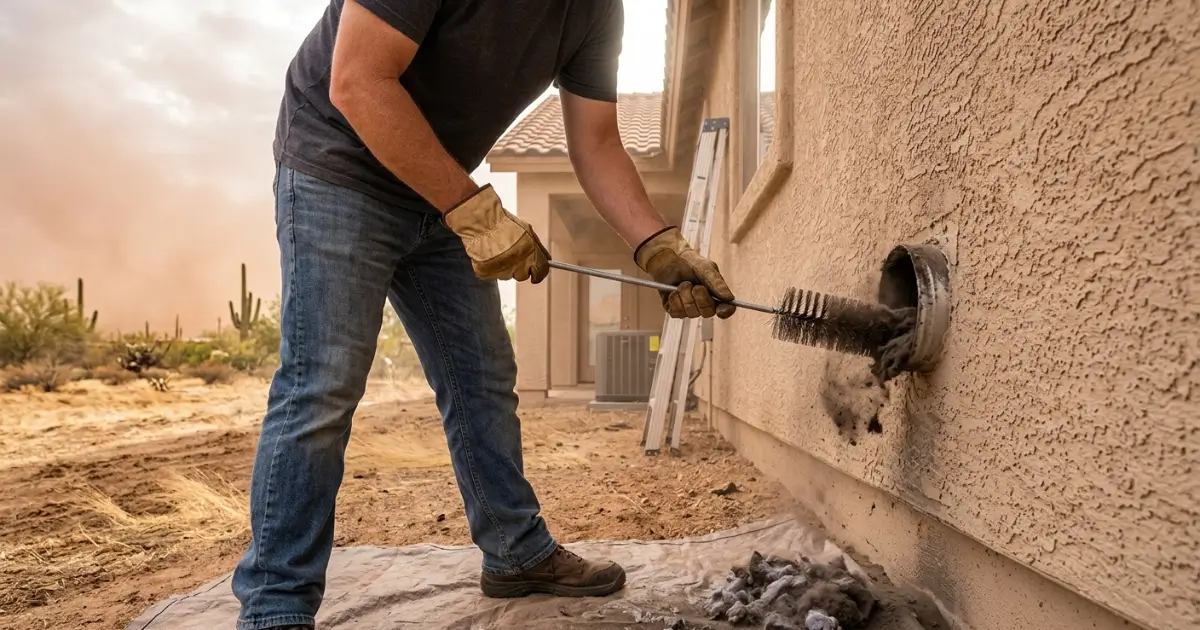
If you have lived in Arizona for even one monsoon season, you know exactly what a haboob looks like rolling across the Valley. A wall of brown, red, and grey particulate matter stretching thousands of feet into the sky, moving faster than most people expect, and leaving a fine layer of dust on every surface it touches inside and outside your home. Most people think about wiping down countertops and cleaning the pool after a big dust storm. Not many think about what just happened to their dryer vent.
Dryer vent cleaning after monsoon dust storms is not something most Arizona homeowners have on their radar, but it should be. Haboobs and the intense dust activity that defines Phoenix Valley monsoon season can affect your dryer vent system in ways that create real safety and performance consequences. Here is a practical, clear look at what actually happens and what you should check after a major storm event.
What Monsoon Dust Does To Your Dryer Vent System
Your dryer vent terminates at the exterior of your home through a vent cap. During normal operation, the cap’s flaps open to allow hot, moist air and lint to escape while keeping pests and outdoor air from entering when the dryer is off. During a haboob, fine particulate matter can force its way past that flap and into the vent duct, particularly if the exterior cap is older, has a damaged or missing flap, or sits in a position exposed to the storm’s direction of travel.
That same fine dust can also coat the exterior flap mechanism and the area around the vent opening, making the flap stiff or partially obstructed. When the flap does not open freely, airflow from your dryer is restricted even when there is no lint blockage inside the duct itself. This is one of the more common post-storm issues that connects directly to the need for dryer vent cleaning after monsoon dust storms.
How Dust Storm Debris Combines With Existing Lint
If your dryer vent already has some lint accumulation inside the duct from normal use, a monsoon dust event can compound that problem. Fine silica particles that infiltrate the vent mix with the lint already inside, creating a denser and more compacted material that is harder to clear and restricts airflow more effectively than lint alone. The result can be a vent that was manageable before the storm and notably obstructed after it.
This is particularly relevant for Arizona homeowners who are already operating on a longer cleaning interval than the desert environment warrants. If your last professional cleaning was more than a year ago, a major storm event is a reasonable trigger for scheduling dryer vent cleaning after monsoon dust storms rather than waiting for the next scheduled appointment.
The Exterior Vent Check You Should Do After Every Major Storm
After any significant dust storm, step outside and take a look at your exterior dryer vent cap. Check whether the flap is opening and closing freely, whether dust or debris has accumulated around or inside the opening, and whether the cap itself is intact. Run the dryer for a few minutes and watch the flap during operation. You should see it opening clearly and feel warm air flowing out.
If the flap is stiff, partially blocked, or if airflow from the vent feels weak, the storm may have created or worsened an obstruction. In some cases, a buildup of dust and debris around the exterior cap can be cleared with a brush and a careful exterior cleaning. In cases where debris has gotten inside the duct or where airflow remains poor after external cleaning, professional service is the appropriate next step.
When To Call For Professional Dryer Vent Cleaning After A Storm
There are a few clear situations where dryer vent cleaning after monsoon dust storms warrants a professional call rather than a DIY exterior check. If your laundry is taking noticeably longer to dry after a major storm, that is a performance change worth investigating. If you hear unusual sounds from the vent system during a drying cycle, or if the exterior of your dryer feels hotter than normal after a cycle, schedule a professional inspection.
If your vent cap was visibly damaged or displaced by a storm, have it inspected and replaced as needed before running the dryer again. An open or damaged exterior vent cap can allow debris to enter the duct freely, accelerating the blockage problem significantly.
Building A Post-Monsoon Season Maintenance Habit
Arizona’s monsoon season typically runs from June 15 through September 30, with the most active haboob period in July and August. Building a post-season dryer vent check into your October home maintenance routine is a practical habit for any Phoenix Valley homeowner. A professional dryer vent cleaning after monsoon dust storms season, combined with regular annual service, keeps your vent system safe and performing correctly year-round.
Remember that the desert environment creates conditions that accelerate lint accumulation even outside of monsoon season. Annual professional cleaning is the minimum for most Arizona households, and adding a post-monsoon exterior check is a simple habit that takes less than five minutes and could catch a developing problem before it becomes a serious one.
Has your vent been affected by this monsoon season? Schedule professional dryer vent cleaning after monsoon dust storms with Lint Away Duct Cleaning. Our certified technicians serve homeowners across the Phoenix Valley. Visit our residential dryer vent cleaning page or call (480) 877-9808 to book your post-storm inspection and cleaning today.